
Same Box, Different Question: What Succura's Architecture Could Do for a Cattle Herd
Succura's edge-AI box watches for a person on the floor and escalates. Could the same architecture watch a herd — static cameras plus a scheduled autonomous drone — and flag a specific animal that hasn't been seen in days? An honest art-of-the-possible look at what's real, what hardware it needs, an

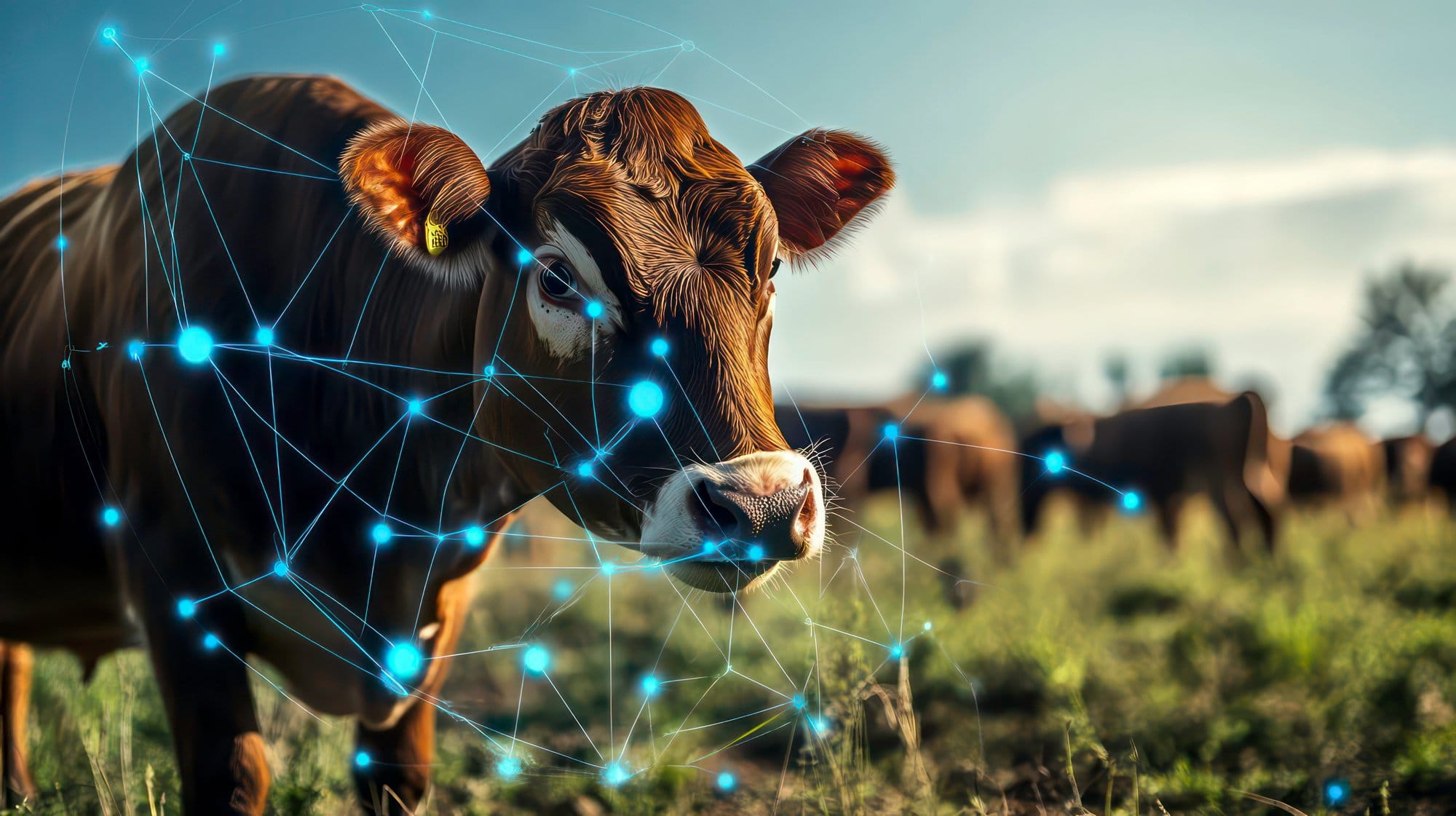
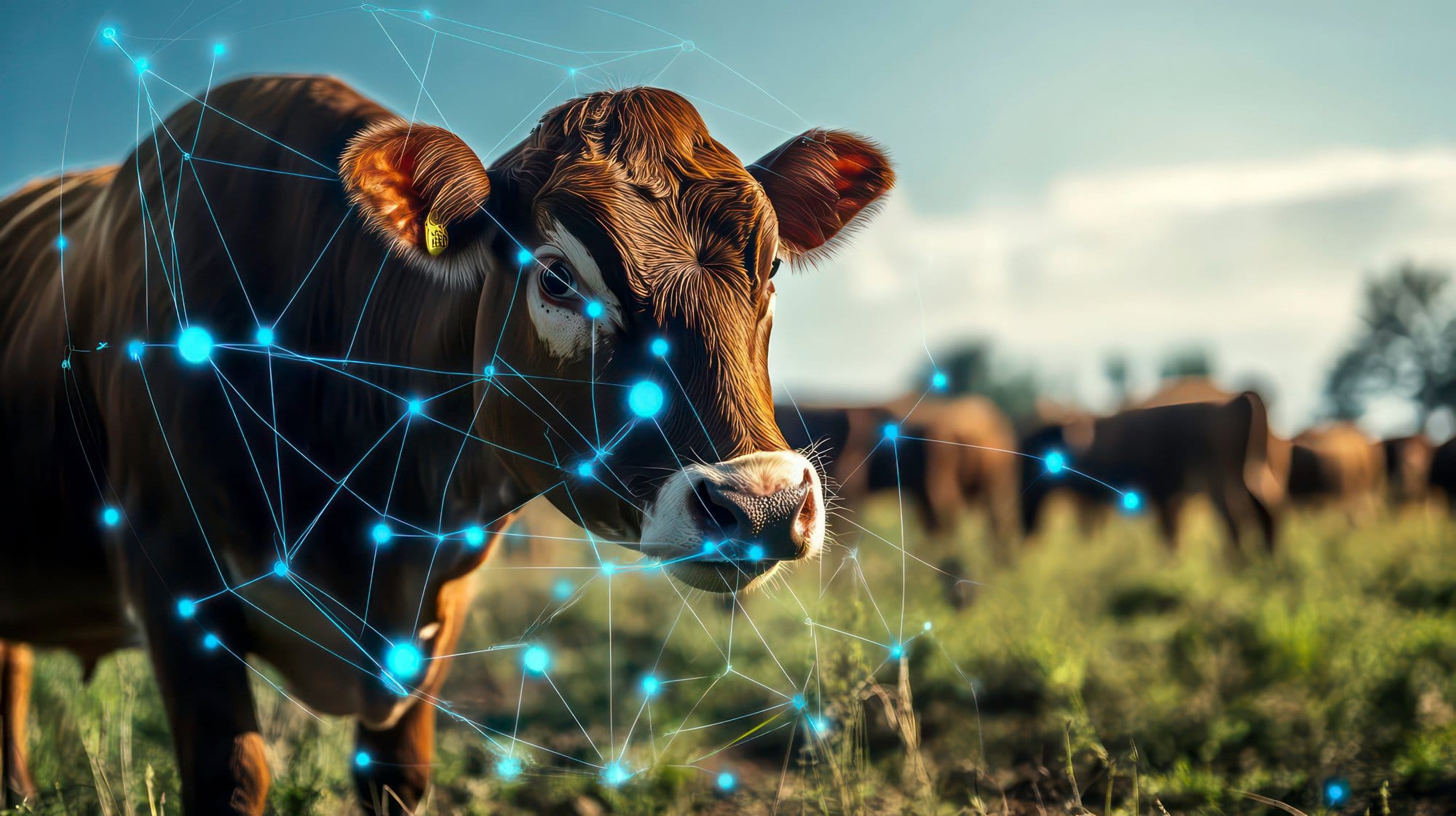
We're building Succura, our passive fall-detection alerting system: an edge-AI box that watches an indoor camera, recognizes a person on the floor who isn't getting up, and works a contact tree until someone responds. Building it raised a question we haven't built anything against: could the same architecture, watching a different scene, tell you a specific cow hasn't been seen in three days?
This is an art-of-the-possible post, not a roadmap. Here's the honest version — what's real today, what would have to change, and where it gets genuinely hard.
The architecture is more general than the product
Succura runs on a small edge box (Hailo-8 accelerator, running a person-gated detector to keep compute cheap) sitting inside the home it protects. When it confirms a fall, it fires a signed event to a cloud escalation engine that works a contact tree until someone acknowledges. That escalation engine doesn't know or care what triggered the event — it just needs a signal and a contact list. It's already brand-agnostic across our first licensee, Invictus. Nothing about it says the trigger has to be "a person is down."
Swap the perception question — from "is a person in frame, and are they down" to "which specific animal is this, and when did we last confirm it was alive and moving" — and you get a materially different product built on the same bones.
Is this real, or just a thought experiment
We checked before writing this down. Individual cattle identification from camera footage is a real, published research field — coat pattern, muzzle print, and facial-feature models report accuracy in the high 90s on benchmark datasets, and it's been demonstrated running as onboard inference on edge hardware in the field, not just in a research cluster. Separately, YOLO-based cattle detection and behavior classification is already deployed on comparable edge hardware in real pastures, and the exact logic we're describing — "this animal has been down or absent longer than expected, flag it" — already shows up in that literature as an early-warning signal for illness or injury. Hailo's own materials list wildlife and remote-perimeter monitoring as adjacent use cases for the same chip class we're already using.
So the building blocks are proven independently. What doesn't exist is us wiring them into Succura's escalation engine.
Where it's genuinely harder than fall detection
Breed matters. The strongest published results are on Holstein-Friesian coat patterns, because the markings are close to a natural fingerprint. Most cattle outside dairy operations are solid-color breeds, which pushes the model toward muzzle-print or facial-feature identification instead — a real, separate model to train, not a parameter change on the fall-detection model.
Open pasture isn't a monitored barn. Nearly every field deployment we found runs indoor or in a fixed-camera pasture zone. A property with cameras only where power already exists gets you "last confirmed at the camera near the barn," not continuous tracking anywhere on the land. That's still a genuinely useful signal — it's how the existing research already frames early-warning absence detection — but it's a narrower promise than what Succura makes indoors, where the whole room stays in view.
The threshold isn't obvious. A person down for 90 seconds is unambiguous. A cow not seen at a specific camera for six hours could just mean she's on the far side of the property. Getting that threshold right is its own tuning problem, and it doesn't transfer from a system built to escalate in under a minute.
Adding eyes in the air: an autonomous drone
Static cameras have a hard ceiling on this problem: you only see what happens to walk past a fixed lens, at a location bounded by where you already have power. The obvious way past that ceiling is a drone that flies a pre-set patrol path on a schedule — every two hours, four hours, whatever the herd size and terrain justify — and streams its own video back into the same edge box the static cameras feed.
That's not a stretch. "Drone-in-a-box" (DIB) systems — a drone that lives in a weatherproof dock, launches on a schedule with no pilot present, flies a programmed route, and returns to the dock to recharge and offload data — are a real, growing product category, and agricultural herd monitoring is already a named use case for it, not a hypothetical one.
Which drone, specifically, matters more than it sounds like it should. As of this writing, DJI and Autel — the two manufacturers most people mean when they say "drone" — are on the FCC's Covered List following a December 2025 national security determination. Existing units keep flying; new units can't get FCC authorization for import or sale. That's not a reason to panic if you already own one, but it's a real reason not to build a new plan around either brand. The credible U.S.-made alternative in the dock-based autonomous category is Skydio: their Dock product line launches a drone autonomously, and — this is the part that actually matters for wiring it into our stack — Skydio publishes a real developer interface with documented RTP/RTSP video output compatible with standard tools like VLC and gstreamer, plus an API for scheduling missions. That's a genuinely different posture than a closed consumer drone: it means the video can land in our own pipeline instead of being locked inside someone else's app.
The honest regulatory reality. A drone launching itself on a timer and flying a route with nobody watching is a beyond-visual-line-of-sight (BVLOS) operation, and that is not simply legal today. Current rules require a Part 107 waiver for BVLOS, granted case by case. The FAA's Part 108 rule — which is specifically designed to replace that waiver system with a standardized framework for exactly this kind of automated, scheduled flight — is still in rulemaking as of mid-2026: the proposal is out, the comment period has closed, and a final rule is expected sometime this year, with phased implementation after that. It isn't in effect yet. The good news for a use case like this one: open rural land with low population density is precisely the risk category the proposed rule is built to streamline fastest, so a ranch is a better starting candidate than almost anywhere else you could point a scheduled drone. But "this is where regulation is heading" and "this is legal to run unattended today" are different sentences, and we're not going to blur them.
Aerial imagery is also a different modeling problem, not a bonus feed. A drone at altitude sees the herd from above, at a distance and angle nothing like a fixed ground camera. Individual-animal identification research we cited earlier is mostly ground-level or low-oblique. A drone feed is better suited to a different job — counting the herd, spotting an animal that's separated from the group, flagging one that's down in a spot no ground camera covers — than to the fine-grained "is this specifically Cow #14" identification a ground camera can do close-up. Realistically, the drone and the static cameras would be doing different halves of the job, not the same job from two angles.
What it would take
We'd reuse the edge box, the Hailo accelerator, the person/animal-gated approach to compute, and the escalation engine itself directly. We'd have to build, new: an identification model trained on the actual herd, a per-animal presence layer tracking last-seen-at-which-camera instead of Succura's single continuous check, new alert thresholds and copy — "Cow #14 hasn't been seen at any camera in 52 hours" carries a different urgency than "a fall was detected," and probably shouldn't sound the same — and, if we add the drone, a dock, a flight-scheduling layer, and a resolved BVLOS authorization before it flies unattended.
On the "would we need bigger AI hardware" question specifically: not necessarily bigger, but probably more. A single Hailo-8 already handles multiple concurrent RTSP streams in Hailo's own published reference architectures — four cameras is a documented baseline, and community deployments report pushing that toward six to eight depending on resolution and model complexity. Adding one more video source, including a drone feed, isn't automatically a hardware-forcing event. Where it gets real is total load: enough static cameras plus a drone feed plus two different models (ground-level identification, aerial counting/anomaly detection) running concurrently will eventually saturate one chip. The documented scaling path for that is adding more Hailo-8 units in parallel — which the hardware and software stack explicitly support — not jumping to a categorically different accelerator. Also worth separating out: the drone's own onboard compute (autonomous flight, obstacle avoidance, staying on its programmed path) is a completely different job, running on the drone itself, from the herd-identification AI running on our ground box. Two AI systems, two different jobs, neither one substituting for the other.
Why this is worth writing down
Noevant's structure exists so the underlying engine — edge inference plus a brand-agnostic escalation layer — isn't welded to one product. Invictus licenses it for eldercare fall alerting today. A livestock-absence product would be a different vertical entirely, with its own model, its own tuning, and — if the drone piece is real — its own regulatory path, running on the same bones. We don't have it built. We're not saying it's next. It's a good test of the question we ask about everything in the Succura stack: is this piece specific to fall detection, or is it a pattern we just haven't pointed at anything else yet.
Noevant is the commercialization vehicle for the AI operational and edge-intelligence stack built and validated across the 2057 Holdings portfolio, including Succura.
Jesse Myers on why he's thinking about this now, and how it connects to a recent rural networking project: From a Rural Gate to a Missing Cow: Two Sides of the Same Infrastructure Question
2057 Holdings on the portfolio pattern this reflects: The Same Engine, Pointed at a Different Problem